Louis Vuitton does not need defending.
It is the most recognisable luxury brand in the world.
It dominates airports, fashion week, celebrity culture, and global retail footprint.
But here’s the uncomfortable truth for collectors:
Cultural dominance does not automatically equal resale strength.
And in 2026, that distinction matters more than ever.
Spectacle Is Not Scarcity
Under Virgil Abloh, Louis Vuitton rewrote the luxury playbook. Collaboration became currency. Streetwear became couture-adjacent. Drop culture met heritage.
Under Pharrell Williams, the house has doubled down on spectacle. Stadium-scale shows. High-visibility moments. Global celebrity magnetism.
On the womenswear side, Nicolas Ghesquière continues to drive architectural futurism with consistency.
Creatively? Vuitton is thriving.
But resale markets reward scarcity — not spectacle.
And Louis Vuitton is not scarce.
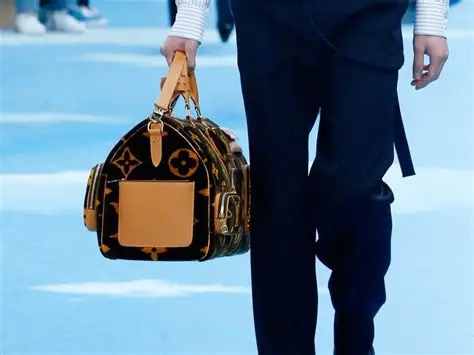
The Monogram Reality
The Louis Vuitton Neverfull and Louis Vuitton Speedy are two of the most successful handbag designs in modern fashion history.
They are:
- Recognisable
- Functional
- Perpetually in demand
They are also:
- Widely produced
- Continuously available
- Frequently resold
Liquidity is high. Appreciation is not guaranteed.
If you purchase monogram canvas at full retail in 2026, expecting it to outperform — you are buying lifestyle, not leverage.
There is nothing wrong with that. But clarity matters.
Where Vuitton Actually Performs
If you are thinking strategically, focus narrows.
1. Abloh-Era Limited Pieces
Defined creative chapters hold value better than ongoing production.
2. Discontinued Variations
When a silhouette is retired or subtly altered, earlier versions gain definition.
3. High Craft Leather
The Louis Vuitton Capucines operates in a different tier entirely. Neutral, structured, excellent condition examples perform significantly more consistently than mass canvas.
Volume dilutes appreciation.
Craft supports it.
The Investment Myth
Louis Vuitton is sometimes grouped with Hermès in casual conversation. They are not operating on the same model.
Hermès restricts supply structurally.
Vuitton maximises visibility strategically.
One builds value through constraint.
The other builds power through presence.
Neither approach is wrong.
But they produce very different resale behaviours.
What This Means in 2026
If you want:
- A culturally iconic piece
- Immediate recognisability
- Strong resale liquidity
Vuitton delivers.
If you want:
- Structural scarcity
- Predictable appreciation curves
- Long-term asset behaviour
You must choose carefully within the house — not broadly.
Not every Louis Vuitton purchase is strategic.
Some are simply beautiful.
And that is enough — if you understand what you are buying.
The Archive Journal Perspective
Buy Vuitton for:
- Cultural relevance
- Defined creative eras
- Craft-forward silhouettes
Avoid:
- Paying resale premiums on high-volume canvas
- Assuming price increases equal future value
Luxury is emotional.
Strategy is optional.
At Elan Archive, we separate the two — deliberately.
If you are considering acquiring or releasing Louis Vuitton, clarity comes before transaction.
Discretion remains standard.