
WHEN DID WE STOP BUYING THINGS WE LOVE?
An Autumn Reflection on Fashion, Value and Finding Your Own Style THE ARCHIVE JOURNAL | A FOUNDER’S PERSPECTIVESunday, 25 October
An Autumn Reflection on Fashion, Value and Finding Your Own Style THE ARCHIVE JOURNAL | A FOUNDER’S PERSPECTIVESunday, 25 October
Why the greatest handbags are recognisable without a logo, and what their silhouettes tell us about fashion, craftsmanship and the

From Ralph Lauren and Prada to Michael Kors, why the people behind our favourite fashion houses deserve as much attention
More luxury guides coming soon!
As billions disappear from the valuations of the world’s biggest luxury companies, something rather extraordinary is happening in the secondary market. Forgotten handbags are being rediscovered, historic designs are commanding renewed attention, and the definition of luxury itself appears to be changing.
By Tony Hookings-Skinner | Founder, Élan Archive
There is something rather fascinating happening in the world of luxury fashion right now, and I have to say, it has caught my attention.
For years, we have watched the world’s great fashion houses increase their prices, expand their boutiques and build extraordinary businesses around the desire to own something beautiful, exclusive and unmistakably luxurious.
A designer handbag became more than an accessory. It became a statement about success, personal taste and, increasingly, the ability to spend several thousand pounds on something that might have cost considerably less only a few years earlier.
But this week, two very different stories emerged that made me question whether the luxury industry is entering one of its most significant periods of change.
On one side, the world’s largest luxury businesses are experiencing a rather uncomfortable reality. Growth is slowing, investors are becoming nervous and billions are disappearing from their market valuations.
On the other, a new report from luxury resale specialist FASHIONPHILE reveals extraordinary renewed interest in historic handbag designs, with some archive pieces recording remarkable increases in average selling prices.
And that raises a question I think the industry should be asking itself.
What happens when consumers begin to realise that the most desirable handbag isn’t necessarily the newest one?
Because I suspect that is exactly what we are beginning to see.
Let’s start with the numbers, because they are quite extraordinary.
On 12 October, LVMH, the luxury powerhouse behind Louis Vuitton, Christian Dior, Fendi, Celine and numerous other prestigious houses, released its third-quarter financial results. The group recorded revenue of approximately €18.5 billion for the quarter, representing organic growth of just 1%.
That might not sound particularly alarming in isolation. After all, €18.5 billion in three months is hardly a business in crisis. However, look a little closer.
Its crucial Fashion and Leather Goods division, home to some of the world’s most recognisable handbag brands, reported a 5% decline in organic sales compared with the same quarter in 2025. For a business that has spent years benefiting from extraordinary consumer demand and successive price increases, those figures deserve attention.
And LVMH is not alone in feeling the pressure.
According to Reuters, the ten leading European luxury companies represented in the STOXX Europe Luxury 10 index had collectively lost approximately $350 billion in stock market value during 2026 by 13 October. Now, that figure is important to understand. We are talking about falling company valuations rather than $350 billion in lost handbag sales or operating revenue.
Nevertheless, it represents a remarkable change in investor confidence towards an industry that once appeared almost immune to economic uncertainty.
China, historically one of luxury’s most important growth markets, continues to experience weaker consumer demand. Economic concerns are affecting spending decisions, while the seemingly endless appetite for increasingly expensive luxury goods is being questioned.
And I think we need to acknowledge something else.
For years, consumers have been asked to accept substantial price increases as an almost inevitable part of owning luxury. A handbag that once represented a significant but achievable purchase has, in many cases, become an altogether different financial proposition.
Yet increasing the price of something does not automatically increase its intrinsic value. There is a difference between exclusivity, desirability and simply becoming more expensive, and perhaps consumers are starting to recognise that distinction.
I am certainly not suggesting that the great luxury houses are finished. Far from it. Their histories, craftsmanship, creative talent and global influence remain extraordinary. But I do wonder whether we are witnessing the beginning of a more discerning approach to luxury consumption.
One where the question is no longer simply, Can I afford it? But rather, Is it actually worth it?
While the financial markets were digesting those disappointing luxury figures, FASHIONPHILE released its 2026 Ultra-Luxury Resale Report.
And this is where things become particularly interesting.
Drawing on activity across its own resale platform between January and July 2026, compared with the corresponding period in 2025, the report reveals a remarkable resurgence in interest surrounding historic handbag designs.
Searches for vintage pieces increased by 112%, let that sink in for a moment.
At a time when parts of the new luxury market are struggling to maintain momentum, interest in older pieces on one of the industry’s established resale platforms has more than doubled. Some of the individual results are even more compelling.
The Saint Laurent Mombasa, originally created during Tom Ford’s tenure at the house, recorded an extraordinary 291% increase in average selling price. The number sold also tripled.
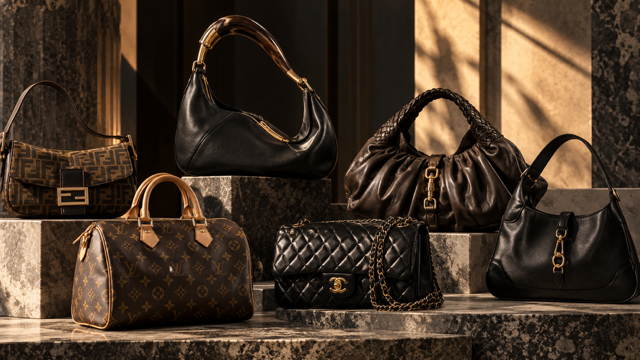
The Fendi Spy, that wonderfully slouchy and unmistakably early-2000s design, experienced a 127% increase in average resale value. Searches for the Fendi Baguette increased by 157%, while its average selling price rose by almost 10%.
The Bottega Veneta Veneta Hobo saw searches increase by 146%, while interest in Chanel’s discontinued Cambon collection climbed by 148%.
Even the Gucci Horsebit Clutch, another wonderful example of Tom Ford’s creative influence, experienced a 95% increase in searches.
These are not insignificant movements.
Of course, we need to interpret the figures carefully. They represent activity on FASHIONPHILE rather than the entire global resale market, and an increase in searches does not necessarily translate into an equivalent increase in selling prices.
A 291% increase in average selling price can also reflect changes in the condition, rarity and particular versions of bags sold during the period. Nevertheless, taken together, the results tell a compelling story.
Consumers are actively seeking designs from the past, and in certain cases, they are prepared to pay considerably more to own them.
The archive is no longer simply somewhere fashion goes to remember its history. It is increasingly somewhere consumers go to find their next handbag.
And I find that incredibly exciting.
Anyone who knows me will know that I have enormous admiration for Tom Ford.
Not simply because of the glamour, the confidence or the undeniably sensual aesthetic that defined his work, but because of his remarkable ability to create a complete visual identity.
His designs were never just products, They represented a world.
During his time at Gucci, Ford transformed the house into one of fashion’s most influential and commercially successful names, creating an aesthetic that was provocative, sophisticated and instantly recognisable.
His subsequent creative leadership at Yves Saint Laurent produced equally distinctive work, and one of the most memorable accessories from that period was the Mombasa.
Introduced in 2001, its beautifully sculptural silhouette and dramatic horn-inspired handle were a wonderful departure from conventional handbag design, it was bold, architectural and unapologetically different. It also had something that many modern accessories struggle to achieve, personality.
Fast-forward more than two decades and Anthony Vaccarello’s reinterpretation of the Mombasa for Saint Laurent has helped bring renewed attention to Ford’s original design.
The result, according to FASHIONPHILE’s figures, has been that extraordinary increase in average resale prices.
What fascinates me is not simply that an old handbag has become fashionable again, it is why.
The Mombasa represents a very particular moment in fashion history. It carries the creative identity of one of the industry’s most influential designers, and its silhouette is distinctive enough to remain recognisable more than twenty years later.
That is not something every handbag can claim and it illustrates an important distinction between a fashionable product and an enduring design. One is created to satisfy the tastes of a particular moment whilst the other can help define that moment for generations.
I have always believed that understanding the person behind a design adds something extraordinary to the experience of owning it.
Knowing who created a bag, what inspired its proportions, why certain materials were chosen and how it fitted into a designer’s wider creative vision transforms it from an accessory into something with genuine cultural significance.
That does not mean every Tom Ford-era Gucci or Saint Laurent piece will suddenly become valuable. But it does mean that exceptional design can have a relevance that extends far beyond its original season.
And right now, consumers appear increasingly interested in discovering that relevance for themselves.
Here is where I think the story becomes especially interesting.
For several seasons, major luxury houses have been looking towards their archives for inspiration. We have seen reinterpretations of the Fendi Baguette, the Chloé Paddington, the Balenciaga City and the Loewe Amazona, alongside renewed attention to historic designs from Saint Laurent and Bottega Veneta.
Fashion has always revisited its past, of course. Designers regularly examine historic collections, reinterpret established house codes and find fresh relevance in silhouettes created decades earlier.
There is nothing inherently wrong with that. In fact, some of the most exciting contemporary fashion emerges when an imaginative creative director finds a new way to express a house’s heritage, although I think something rather unexpected happens when brands begin celebrating their own archives so enthusiastically.
They remind consumers that the originals already exist. And suddenly, somebody considering a newly released interpretation of a historic handbag might start looking for the original version instead.
Why buy the contemporary reinterpretation when you could potentially own the piece that inspired it? Why not look for the original proportions, the period hardware or the particular leather treatment that made the design famous in the first place? And perhaps most importantly, why not own something that has already established its place in fashion history?
There are perfectly good reasons to choose the modern version. Contemporary construction, updated functionality, warranty support and the pleasure of buying something new all have genuine appeal. But there is also an undeniable attraction to owning an original.
The Fendi Spy is a wonderful example, its distinctive, relaxed silhouette feels remarkably appropriate for today’s renewed appreciation of softer, larger handbags. Yet it belongs unmistakably to the aesthetic of the 2000s.
It carries the proportions, detailing and character of the period in which it was created and for collectors who love that period, those qualities are part of its appeal.
Fashion houses are reviving their historic designs, but in doing so, they may also be introducing a new generation of consumers to the originals.
For the secondary market, that is a fascinating development.
Amid all these dramatic archive revivals, another finding from FASHIONPHILE’s report deserves attention.
For the second consecutive year, the Louis Vuitton Speedy was the platform’s most-shopped handbag. Its reported resale value also increased by 16.2% year on year.
Now, I absolutely love this.
Because the Speedy isn’t a passing trend, and it certainly isn’t a forgotten design suddenly enjoying an unexpected comeback, it is one of fashion’s great survivors. Its history reaches back to the early 1930s, when Louis Vuitton introduced the Express, the design that would become the Speedy.
Over the decades, it has evolved through countless interpretations, materials, sizes and artistic collaborations, yet the essential silhouette remains instantly recognisable. And perhaps that is the secret, the Speedy has never needed to become something completely different to remain desirable. It has adapted without abandoning its identity.
There is a lesson here for the wider luxury industry.
The most successful handbag designs are not necessarily those that attract the greatest attention during their launch season. They are the ones that people continue wanting long after the advertising campaigns have disappeared.
Interestingly, FASHIONPHILE’s second most-shopped bag was the Chanel Double Flap, followed by the Prada Re-Edition 2005. The Hermès Evelyne also appeared among the platform’s ten most-shopped handbags. These are very different designs, appealing to different consumers and fulfilling very different purposes.
But they share an important characteristic, they have established identities that extend beyond a single fashion season.
And perhaps that is why they continue to resonate.
There is another aspect of the resale market that I think deserves far more attention than it receives, emotion.
Because handbags are not simply financial transactions or objects to be measured against their original retail prices. They are often deeply personal.
Think about the person who remembers seeing a particular Chanel handbag in a magazine twenty years ago but could never afford it or somebody who fell in love with a Dior design during John Galliano’s extraordinary creative period.
Perhaps they admired a Fendi Baguette during the height of its popularity, or dreamed of owning a Louis Vuitton collaboration that seemed completely out of reach. At the time, those pieces represented aspiration, but years later, circumstances change.
Careers develop, priorities shift and the things we once dreamed about can become achievable. Suddenly, the handbag that somebody loved when they were 25 becomes the handbag they finally purchase at 45, 55 or even 65. I think there is something rather wonderful about that.
The appeal isn’t necessarily about impressing anybody else, it is about reconnecting with something that meant something to you.
And unlike a new collection, which is presented to consumers through advertising, celebrity endorsements and carefully orchestrated campaigns, an archive piece often begins with a memory. That emotional connection is extraordinarily powerful.
It is also one of the reasons I love working in the preloved luxury market.
Every bag has a story. Some have been cherished for years, whilst others have spent most of their lives carefully stored away, waiting for somebody new to appreciate them.
Occasionally, you come across a piece that perfectly captures a particular designer, fashion movement or period of cultural history. And when you find the right person for that bag, it becomes so much more than a sale.
It becomes the next chapter in its story.
Now, before we all start rushing out to buy every handbag from 2003, I think we need a little perspective.
Because while the resale figures are exciting, they do not mean that every vintage designer bag is suddenly an investment opportunity, far from it. I regularly see pieces advertised at prices that bear little relationship to what buyers are actually prepared to pay. Sometimes a seller sees that a particular model is trending and assumes every version must therefore be valuable.
But the resale market is considerably more complicated than that, condition matters, authenticity matters.
The particular model, material, colour, production period and availability of original accessories can all influence desirability and resale value. Most importantly, provenance can make an enormous difference, particularly when dealing with collectible or historically significant designs.
A rare handbag in exceptional condition, accompanied by its original documentation and accessories, may appeal to a very different buyer from an extensively worn example of the same model.
There is also a fundamental difference between an advertised price and a completed sale, I cannot emphasise that enough. A handbag being listed for £3,000 does not mean somebody will pay £3,000 for it. And an increase in average selling prices on a major resale platform does not guarantee that an individual buyer will make a profit.
Fees, authentication costs, repairs and the time required to find the right buyer all influence the real financial outcome.
For me, the most sensible approach has always been to buy pieces because you genuinely appreciate them, while making informed decisions about their condition, authenticity and market value. If a handbag retains its value particularly well, wonderful, if it appreciates, even better.
But I would much rather see somebody purchase a beautifully made bag they will enjoy carrying than spend thousands on something they don’t particularly love simply because they have been told it is an investment.
Good taste and good judgement should always come before speculation.
I keep coming back to the contrast between the two stories that emerged this week.
On one side, an industry experiencing weaker sales, nervous investors and growing questions about the sustainability of its pricing. On the other, a secondary market revealing renewed enthusiasm for designs created years, sometimes decades, earlier.
It would be tempting to conclude that consumers are abandoning new luxury in favour of vintage, but I don’t believe the evidence supports such a sweeping statement.
The luxury industry remains enormous, and its strongest houses continue to possess remarkable creative and commercial power. Nor does increased demand on one resale platform prove that the entire secondary market is outperforming luxury retail.
What these figures do suggest, however, is that the relationship between consumers and luxury is evolving, I think that evolution could be enormously positive.
For too long, the conversation surrounding luxury handbags has been dominated by price increases, waiting lists, exclusivity and the perceived status of owning the newest release. Those things undoubtedly influence the market but they are not what originally made the great fashion houses extraordinary.
Their reputations were built on design, craftsmanship, innovation, heritage and the vision of exceptional creative individuals and those qualities don’t disappear simply because a collection is no longer current.
A beautifully conceived handbag from 2001 does not become a poor design in 2026 merely because it is twenty-five years old, quite the opposite.
Sometimes the passage of time allows us to recognise just how special it was.
When I founded Élan Archive, I wanted to create something built around a genuine appreciation of designer handbags. Not simply buying and selling luxury goods, but understanding their stories, recognising their qualities and helping people discover pieces they might otherwise overlook.
The more time I spend examining handbags, speaking with clients and researching individual designs, the more convinced I become that knowledge is one of the most valuable things we can bring to the luxury market. Understanding the difference between a seasonal trend and a genuinely significant design matters. Recognising the influence of a particular creative director matters and knowing what to look for in construction, materials, condition and authenticity matters.
And above all, understanding the difference between what something costs and what it is worth matters.
I love visiting the boutiques. I love discovering new collections, discussing design with sales associates and seeing how contemporary creative directors reinterpret the heritage of their houses.
There is an extraordinary amount of talent and craftsmanship involved in producing exceptional new luxury goods, and I would never want to diminish that.
But I get just as excited discovering a remarkable archive piece and sometimes more so.
Because when you hold a handbag that perfectly represents a particular moment in fashion history, you are holding a little piece of that history, when the design is still relevant, beautiful and desirable decades later, that tells you something rather important about the person who created it.
There is also something deeply satisfying about seeing a wonderful preloved handbag find a new home. A piece that has already been loved, appreciated and enjoyed gets the opportunity to begin another chapter.
That is what makes this business so rewarding for me and it is why authenticity sits at the very heart of Élan Archive.
If we are going to celebrate these designs, their histories and their creative significance, then knowing that the pieces themselves are genuine is absolutely fundamental.
Without authenticity, the story loses its integrity.
So, what do I take away from this extraordinary week in luxury fashion?
Certainly not that the great fashion houses are finished and not that every handbag from the 1990s or 2000s is about to become the next collector’s dream. But I do think we are seeing the emergence of a more interesting, more knowledgeable and perhaps more confident luxury consumer.
One who is prepared to question whether a new handbag genuinely represents good value. One who understands that distinctive design doesn’t become irrelevant simply because fashion moves on and one who increasingly appreciates the appeal of owning something with a history rather than simply something with a high price tag.
There is still enormous pleasure in walking into a beautiful boutique and choosing something new. But there is equally enormous pleasure in discovering a remarkable piece that somebody else has overlooked.
Perhaps the future of luxury isn’t about choosing between the two, perhaps it is simply about understanding both. Because the most desirable handbag in the world isn’t necessarily the newest, the rarest or the most expensive. Sometimes it is the one that makes you stop, look twice and think, Now that is a beautiful piece of design.
And sometimes, that handbag has been waiting twenty years for you to find it.
Luxury may be losing billions in market value. But the archive is reminding us where lasting value can still be found.
And personally, I think that is a rather wonderful story.
If there is one thing I would love you to take away from this week’s Archive Journal, it is this.
Don’t allow fashion to dictate what you should love. Learn about the designers, understand the history, look at the craftsmanship and ask questions about authenticity and condition.
And most importantly, buy what genuinely excites you, because a handbag with a great story, exceptional design and a little history will always be worth talking about.
I’d love to know what you think. Are we witnessing a genuine shift towards archive luxury, or will the appeal of buying brand-new always win? Is there a handbag from your past that you would love to own today?
Come and tell me. I could talk about this subject for hours.
Keep the passion, enjoy the journey.
Tony x
Tony | The Designer Bag Guy
Founder, Élan Archive
This week’s Journal draws on reporting and market analysis published during October 2026.
LVMH — Third Quarter 2026 Financial Results, 12 October 2026.
Official group financial reporting, including third-quarter revenue of €18.504 billion and a 5% organic decline in Fashion and Leather Goods.
Reuters — European Luxury’s $350 Billion Blowout, 13 October 2026.
Reporting on the decline in European luxury company valuations, investor confidence and weakness in Chinese consumer demand.
FASHIONPHILE — 2026 Ultra-Luxury Resale Report.
Analysis of resale platform performance, including vintage searches, archival revivals and changes in average selling prices. Unless otherwise stated, the year-on-year comparisons cover January–July 2025 against January–July 2026.
TheIndustry.fashion — FASHIONPHILE Resale Report Finds Y2K Revivals Driving Luxury Bag Prices Higher, 14 October 2026.
Further analysis of the renewed demand for the Saint Laurent Mombasa, Fendi Spy, Chanel Cambon and other archive handbags.
Market statistics are provided for editorial and educational purposes. Resale performance varies by item, condition and market, and past price movements do not guarantee future appreciation.
Discover the Archive: elanarchive.co.uk
Authentic luxury. Extraordinary stories. Beautifully curated.