
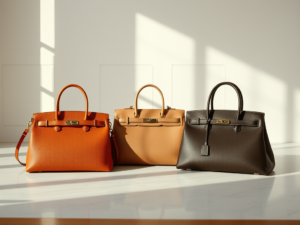
What’s Next? My Six Predictions for the Next Wave of Bags – Autumn/Winter 26
There is a question I get asked constantly. What’s going to be the next It bag? And increasingly, I think
There is a question I get asked constantly. What’s going to be the next It bag? And increasingly, I think
A Founder’s Reflection by Tony Hookings-Skinner There is a phrase I hear increasingly often when people talk about counterfeit designer

There are some things in fashion that need absolutely no introduction. From the brilliance of Karl Lagerfeld, we gained the
More luxury guides coming soon!
There are certain things I do almost instinctively when someone hands me a beautiful bag.
I feel the leather, I look at the proportions and then, invariably, I touch the hardware.
The weight of it, the movement and especially the finish. That satisfying little click when something closes exactly as it should. It’s probably the handbag equivalent of closing the door of a beautifully engineered car.
You just know.
And here’s my slightly controversial opinion: hardware can make or break a luxury bag. You can give me the most exquisite leather in the world, but put cheap, overly shiny or badly proportioned hardware on it and you’ve lost me, because hardware isn’t and should never be an afterthought.
On the greatest handbags, its jewellery, sometimes it’s the single detail that tells you exactly which house you’re looking at before you’ve spotted a logo anywhere.
⸻
luxury fashion is currently obsessed with discretion. Logos have become smaller, branding quieter and we’re constantly being told that the ultimate expression of taste is something only those “in the know” will recognise.
I’m not entirely convinced this is as new as we’re pretending it is.
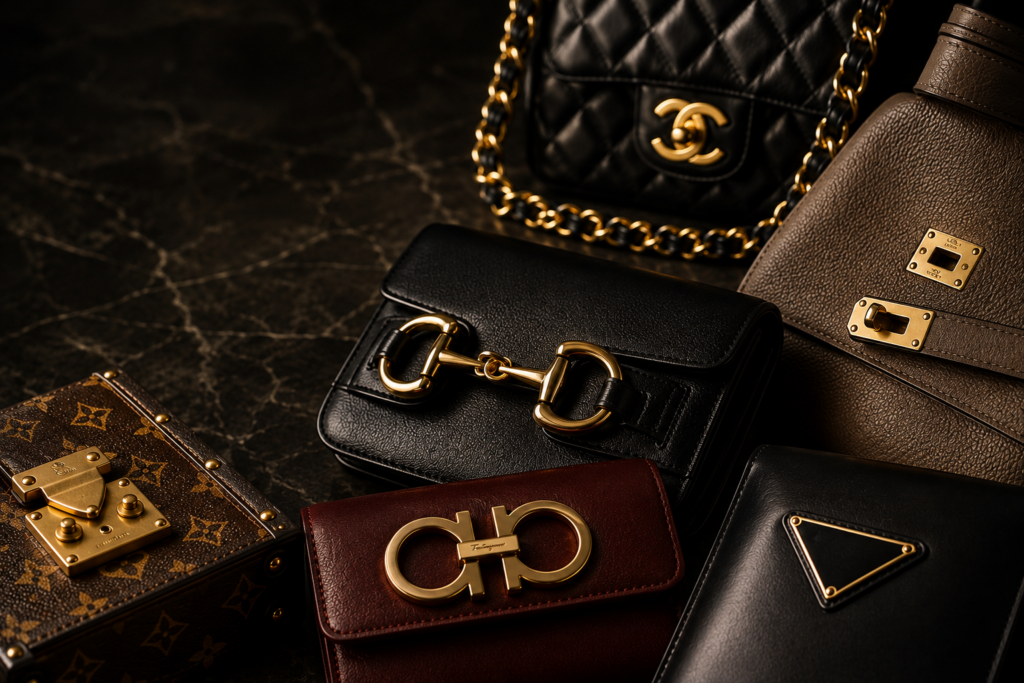
The great fashion houses have been doing it through hardware for decades. Show a handbag collector the turn-lock and plaques of an Hermès Kelly or Birkin and you don’t need to write HERMÈS across the front.
Show us a horsebit and our minds immediately go to Gucci, the interlocking CC turn-lock? Chanel. A beautifully executed Gancini? Ferragamo.
These aren’t simply fastenings anymore, they’re signatures.
⸻
There is something wonderfully theatrical about opening a Birkin, the sangles, the plaques, the turn-lock, the lock and clochette. If we’re being completely honest, there are considerably quicker and simpler ways to get into a handbag.
But that’s rather missing the point, Hermès turns opening a bag into a ritual.
And having handled and owned these pieces, that’s something photographs simply don’t communicate, the hardware has substance, you feel it. Even the sound contributes to the experience.
And perhaps that’s why the Birkin and Kelly hardware has become so iconic. It was designed to perform a function, yet somewhere along the way that function became part of the visual identity of the bag itself.
It’s engineering disguised as jewellery.
⸻
Chanel takes a completely different approach. Where Hermès hardware feels equestrian and engineered, Chanel hardware feels decorative. Jewellery has always been part of the language of the house, so perhaps it isn’t surprising that the bags often feel accessorised before you’ve added anything to them.
The chain, the leather woven through it, the turn-lock and that beautifully finished and unmistakable CC.
I’m particularly fascinated by what happens when Chanel changes the hardware on a familiar silhouette. Gold can make a black Classic Flap feel rich and almost opulent.
Silver makes the same bag feel cooler and more contemporary. Change the scale of the chain and suddenly the entire personality shifts again.
Same basic bag, completely different attitude, now that’s a masterclass in design language.
⸻
The Gucci Horsebit may be one of the finest examples of hardware becoming branding,
and I love it precisely because it doesn’t need to scream. Its roots in Gucci’s equestrian heritage give it authenticity, but its genius lies in how easily it has travelled through different eras from vintage Gucci to Tom Ford Gucci and Alessandro Michele Gucci through to today’s Gucci.
Different creative visions, yet that small piece of equestrian hardware keeps connecting everything back to the house.
That’s incredibly difficult to achieve, fashion changes but a great design code survives it.
⸻
Now for a personal favourite, Ferragamo’s Gancini. Personally speaking, I think Ferragamo is still criminally underestimated in the handbag conversation, there, I’ve said it.
The Gancini is elegant, distinctive and immediately recognisable without feeling remotely desperate for attention. That’s exactly what good hardware should do, it adds identity without overwhelming the design.
Some houses put branding onto a bag, the best houses build branding into it. There’s a difference.
⸻
Louis Vuitton’s relationship with hardware makes complete sense when you remember where the house began, travel, trunks, locks and protection.
So when we see S-locks, clasps and trunk-inspired metalwork appearing on modern Louis Vuitton handbags, we’re not simply seeing decoration, we’re seeing history being recycled into contemporary design.
The Pochette Métis is a brilliant example, remove that central S-lock and the bag loses an enormous amount of its identity.
That little piece of metal does a lot of the heavy lifting work.
⸻
Prada presents an interesting counterpoint because its famous triangle sits somewhere between logo and hardware, its branding, unquestionably, but it’s also an object. A piece of metal integrated into the architecture of the bag, and that distinction matters.
On a beautifully restrained Prada Galleria, that triangle can be almost all the identification the bag needs. Again, the best branding doesn’t always have to be printed across something, sometimes it can simply be engineered into it.
⸻
And then there’s Bottega, which raises perhaps the most interesting question of all,
Do we actually need hardware?
Bottega Veneta built an extraordinary visual identity around leather itself. The intrecciato weave became the signature, no giant initials required and no famous lock necessary. I love that, because it proves the opposite side of the argument.
Hardware is incredibly powerful, but knowing when not to use it can be equally sophisticated. Restraint is a design decision too.
⸻
This is one of those things that’s difficult to explain until you’ve handled enough bags, weight communicates quality.
Not always, as heavy hardware certainly doesn’t automatically mean good, but beautiful hardware tends to have a reassuring substance to it, pick up a clasp, turn a lock, move a zip. There should be resistance where resistance belongs and fluidity where movement is required.
It’s incredibly tactile, it’s one of the reasons buying luxury purely through photographs can never tell the complete story.
Sometimes you need to hold something to understand why it’s special.
⸻
Scratched hardware doesn’t particularly frighten me, there, I said that too.
On a bag that’s been genuinely loved, a little wear on a lock or clasp can be part of its story. What bothers me far more is hardware that never felt right in the first place. It could be too light, too yellow, too shiny or simply just too damn big! Hardware should complement a bag, not fight with it.
I’ve handled pieces where I’ve adored the leather and admired the construction, but the hardware has stopped me falling in love.
I’ve also handled bags where one beautiful clasp has completely won me over.
Those tiny decisions matter.
⸻
The longer I spend around handbags, the less interested I become in simply asking,
“What brand is it?”. I’m much more interested in asking, “Why does it work?”
That’s really what The Design Language Series is about.
Understanding why a Chanel feels like Chanel, why a Birkin could never be mistaken for anything else, why one small Horsebit can carry decades of Gucci history or why the Gancini deserves more attention.
And why sometimes Bottega can remove almost everything and still be instantly recognisable. Great handbag design is a collection of decisions, selecting the Leather, deciding on the ideal proportion, designing the Construction and choosing the texture.
And yes, those wonderful little pieces of metal we probably don’t talk about nearly enough, because the best hardware doesn’t simply close a handbag, it completes it.
And if it gives me that perfect little click as well? I’m sold.
Keep the passion. Enjoy the journey.
By Tony Hookings-Skinner, Founder of Élan Archive